The Episcopal Church is a mainline Protestant denomination rooted in the Anglican tradition, governed by bishops, and defined by a liturgical worship style that balances Catholic heritage with Reformed theology. It stands out today for its theological inclusivity, its decentralized governance structure, and a sustained commitment to social justice that sets it apart from many of its peers in global Christianity.
When people ask what Episcopal Churches are, they're rarely looking for a simple definition. They want to understand what makes this tradition distinct — why it looks and feels different from evangelical megachurches, why it shares so much with Roman Catholicism yet operates independently, and why it consistently draws people who value both ancient ritual and progressive values. The answer lies in a history spanning nearly five centuries, a governance model built around episcopal authority, and a theological culture that prizes the tension between tradition and adaptation.
Origins and history of Episcopal Churches
The Episcopal Church didn't emerge from a single dramatic moment of theological rupture. Its roots trace directly to the Church of England, itself the product of the English Reformation of the 16th century. When King Henry VIII broke with Rome in 1534, the resulting church retained much of Catholic liturgical practice while rejecting papal authority. This compromise — Catholic in form, Reformed in doctrine — became the defining tension of the Anglican tradition, and it remains so today.
From the Church of England to a global communion
The spread of Anglicanism followed the expansion of the British Empire. By the 18th and 19th centuries, Anglican churches had taken root across North America, Africa, Asia, and the Pacific. What began as a colonial religious infrastructure gradually developed into autonomous national churches, each maintaining ties to the Archbishop of Canterbury as a symbolic head but operating independently in their governance. The Anglican Communion today encompasses roughly 85 million members across 165 countries, making it one of the largest Christian bodies in the world.
The American branch and its distinct identity
In the United States, the Episcopal Church formally organized itself after the American Revolution, when clergy could no longer swear allegiance to the British Crown as required by the Church of England. The Protestant Episcopal Church in the United States of America was established in 1789, adopting its own constitution and canons while preserving the liturgical and doctrinal framework inherited from England. The name "Episcopal" comes from the Greek episkopos, meaning bishop, reflecting the church's core governance principle. Over the following two centuries, the American Episcopal Church developed a reputation for theological moderation, social engagement, and a willingness to adapt its practices — ordaining women as priests from 1976, and as bishops from 1989.
Structure and governance of the Episcopal Church
Understanding Episcopal governance means grasping a single core principle: authority flows through bishops. This is what distinguishes Episcopal polity from congregationalist models (where individual churches govern themselves) and presbyterian models (where elected elders hold authority). In the Episcopal system, the bishop is not a figurehead. The bishop ordains clergy, confirms members, and holds ultimate responsibility for the spiritual and administrative life of a diocese.
The role of bishops and the diocesan system
A diocese is the basic administrative unit of the Episcopal Church, typically corresponding to a geographic region. Each diocese is led by a bishop, elected by a diocesan convention composed of clergy and lay delegates. This combination of episcopal authority and democratic participation is characteristic of the tradition. Bishops don't simply inherit their positions — they are elected, consecrated, and accountable to their communities. The Presiding Bishop serves as the chief pastor and primate of the Episcopal Church, elected by the General Convention every nine years.
Synods, conventions, and lay participation
The General Convention is the governing body of the Episcopal Church, meeting every three years. It consists of two houses: the House of Bishops and the House of Deputies, the latter comprising both clergy and laypeople. This bicameral structure ensures that governance is never purely clerical. Decisions on doctrine, liturgy, and church policy require consensus across both houses. The result is a system that is simultaneously hierarchical and participatory — a balance that reflects the broader Anglican instinct for holding opposites in productive tension.
The Episcopal Church operates through approximately 100 dioceses in the United States, each led by an elected bishop. The General Convention, held every three years, sets policy for the entire denomination through a bicameral legislature of bishops and lay/clergy deputies.
Beliefs and liturgical practices
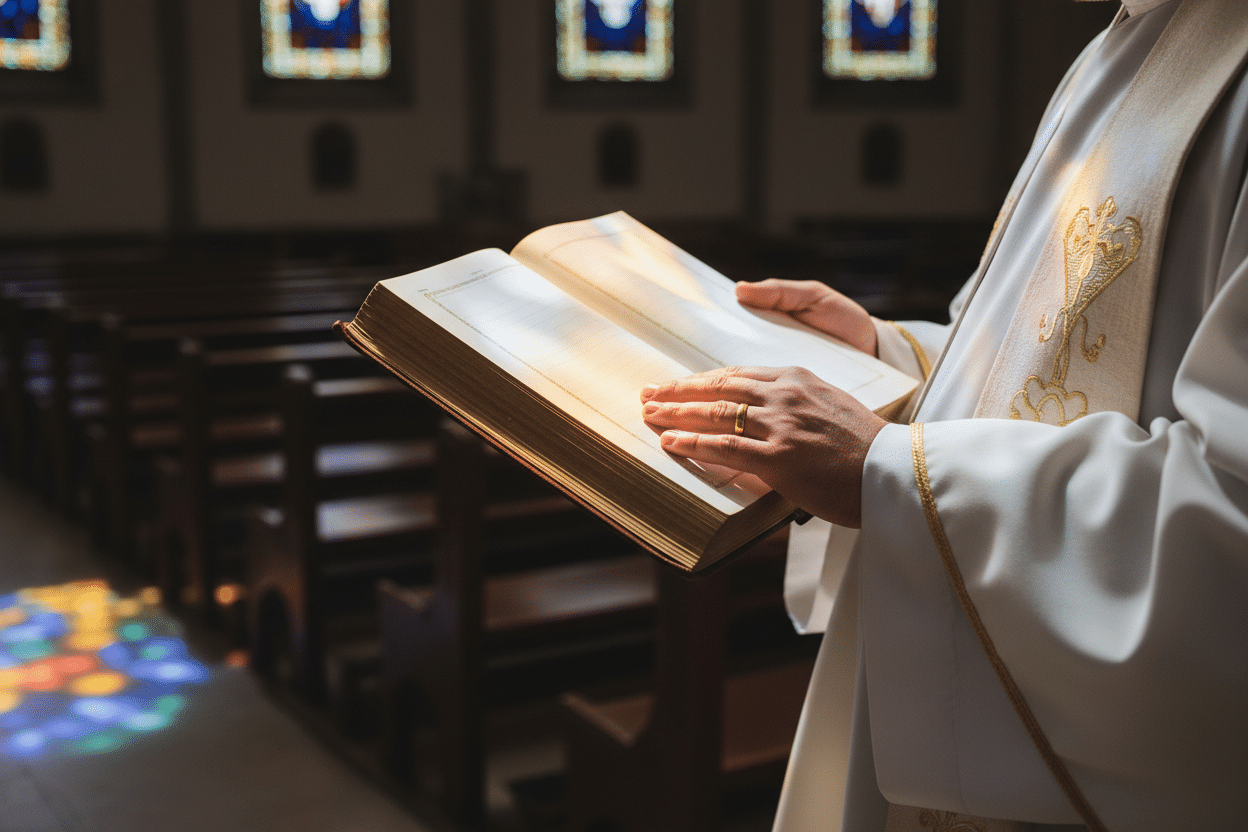
Episcopal theology resists easy summary, which is partly the point. The tradition has always prioritized orthopraxy — right practice — over rigid orthodoxy. The Book of Common Prayer, first published in 1549 under Archbishop Thomas Cranmer, remains the central liturgical document of Anglican and Episcopal worship. It provides the order of service for everything from Sunday Eucharist to baptisms, weddings, and funerals. The current American edition dates to 1979 and reflects both the liturgical renewal movement of the 20th century and distinctly American theological sensibilities.
Core doctrines and the via media
Episcopal theology is often described through the concept of the via media, or "middle way," a term that captures the tradition's deliberate positioning between Roman Catholicism and continental Protestantism. Episcopalians affirm the authority of Scripture, but interpret it through the lens of tradition and reason — the three-legged stool famously attributed to Richard Hooker, the 16th-century Anglican theologian. The church affirms the historic creeds (the Apostles' Creed and the Nicene Creed) and the authority of the first four ecumenical councils. But it does not require assent to detailed confessional statements, leaving significant room for theological diversity among its members.
Sacramental worship and liturgical identity
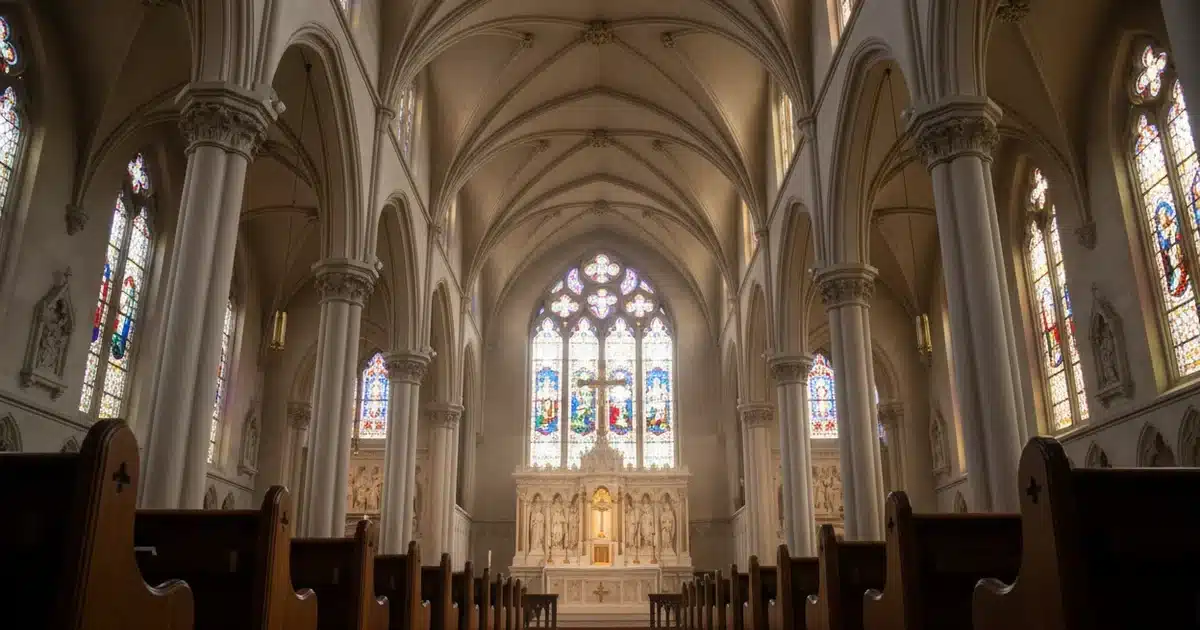
Episcopal liturgy is sacramental at its core. The two primary sacraments — Baptism and the Eucharist — are celebrated regularly and considered central to Christian life, not merely symbolic ordinances. The physical environment of Episcopal worship reflects this sacramental theology: many churches feature altars, candles, incense, vestments, and stained glass, creating a sensory experience that connects contemporary worshippers to centuries of Christian practice. Music plays a significant role as well, with the tradition drawing on both classical choral settings and contemporary hymnody. This liturgical richness is frequently cited by newcomers as one of the most compelling aspects of Episcopal worship.
Social engagement and community commitment
The Episcopal Church has a long record of institutional engagement with social and political questions. This is not a recent development driven by cultural pressure — it reflects a theological conviction that the Gospel has public implications. From the abolitionist movement of the 19th century to the civil rights movement of the 20th century, Episcopal clergy and laypeople have consistently placed themselves at the intersection of faith and justice.
Advocacy on contemporary issues
In recent decades, the Episcopal Church has taken formal positions on a range of contemporary issues, including climate change, immigration reform, racial reconciliation, and LGBTQ+ inclusion. The election of Gene Robinson as the first openly gay bishop in 2003 was a landmark moment — controversial within the Anglican Communion but widely seen as a natural expression of the church's inclusive theological trajectory. The Episcopal Church's advocacy work is coordinated through its Office of Government Relations in Washington, D.C., which lobbies on legislation aligned with the church's social justice commitments.
Local congregations as community anchors
Beyond national advocacy, Episcopal congregations function as significant community institutions at the local level. Many operate food pantries, homeless shelters, after-school programs, and health clinics, often in partnership with municipal governments and secular nonprofits. This model of parish-based social service reflects the Anglican tradition's historical role as an established church with responsibilities extending beyond its own membership. Even in cities where Episcopal attendance has declined, the physical presence of historic church buildings and the social infrastructure they house continues to serve communities well beyond the congregation itself.
- Inclusive theological culture that welcomes diverse backgrounds
- Rich liturgical tradition with deep historical roots
- Democratic governance that gives laypeople real authority
- Strong institutional presence in social service and advocacy
- Sustained membership decline over several decades
- Tensions with more conservative Anglican provinces globally
- Aging congregations in many regions
- Financial strain on smaller parishes
Challenges shaping the Episcopal Church's future
The Episcopal Church faces the same demographic headwinds as most mainline Protestant denominations in the West. Average Sunday attendance has fallen significantly since the 1960s, when the church counted roughly 3.6 million active members. By the 2020s, that figure had dropped to under 1.7 million, a decline that reflects broader trends of religious disaffiliation in American society rather than any single internal cause. The church is also aging: the median age of Episcopal worshippers is substantially higher than the national average, raising legitimate questions about generational renewal.
Navigating tensions within the Anglican Communion
The Episcopal Church's progressive stances on gender and sexuality have created genuine fractures within the global Anglican Communion. Several provinces in Africa and Asia, representing far larger memberships than the American church, have distanced themselves from Canterbury and from the Episcopal Church over these issues. The formation of the Anglican Church in North America (ACNA) in 2009, grouping conservative congregations that left the Episcopal Church, formalized a split that continues to shape the landscape. The Episcopal Church remains a member of the Anglican Communion, but its relationship with more theologically conservative provinces remains strained.
Adaptation and the path forward
And yet the Episcopal Church is not standing still. Efforts to reach younger and more diverse communities have produced genuine results in some urban dioceses. Church plants in unconventional spaces — coffee shops, arts venues, community centers — have attracted people who might never enter a traditional Gothic nave. Digital ministry, expanded during the COVID-19 pandemic, has given smaller congregations tools to reach beyond their immediate geography. The church's theological DNA — its comfort with ambiguity, its liturgical depth, its commitment to both tradition and reform — may prove to be an asset rather than a liability in a cultural moment defined by institutional distrust and spiritual searching. Whether that potential translates into measurable renewal remains the central question for Episcopal leadership in the years ahead.