A supervolcanic eruption could occur before the end of this century with a 1-in-6 probability, according to climatologist Markus Stoffel of the University of Geneva. The consequences, ranging from global temperature collapse to mass famine and civilizational disruption, would dwarf anything modern societies have experienced.
The warning isn't new, but it's growing louder. Over the last several years, scientists and geoscientists have been intensifying their alerts about a category of volcanic event that sits in an entirely different league from anything in living memory. Not the kind of eruption that makes the evening news for a week and fades. The kind that reshapes the world.
And humanity, for all its technological sophistication, has no unified plan to deal with it.
A 1-in-6 chance before 2100
The number that stops conversations is 1/6. That's Stoffel's estimate of the probability that a massive supervolcanic eruption strikes before the end of the 21st century. To put that in perspective: those are roughly the same odds as rolling a one on a standard die. Not a remote theoretical scenario. A plausible near-future event.
What makes a supervolcanic eruption different
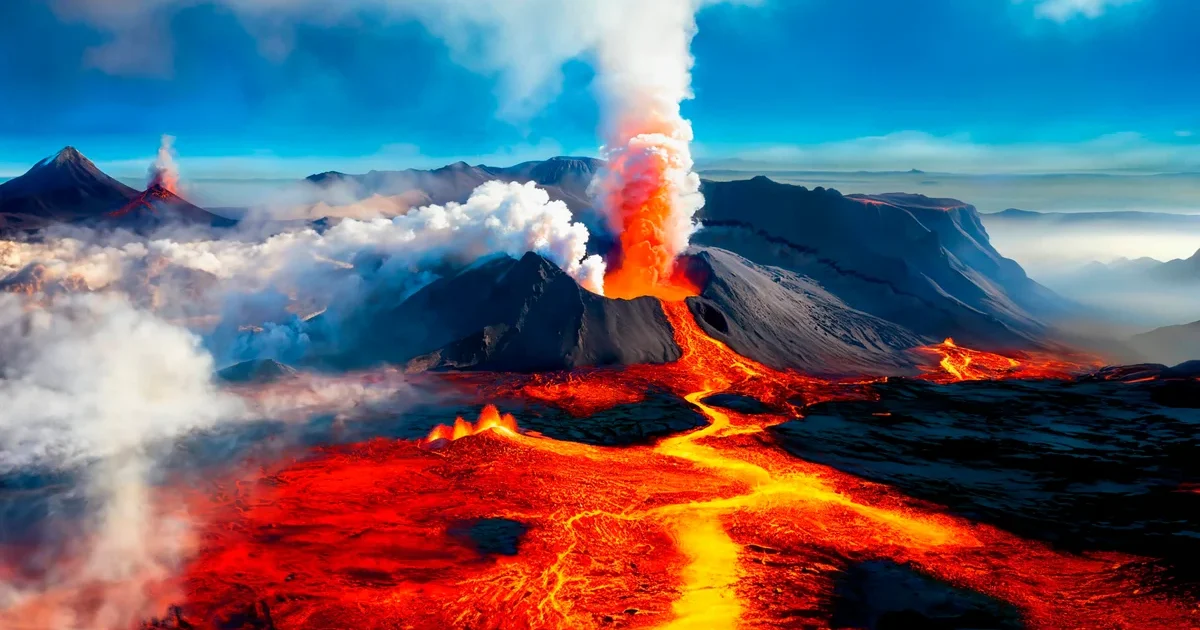
The sites under closest watch include Yellowstone, in the western United States, and the Caldera de Toba in Indonesia. These aren't ordinary volcanoes. A supervolcanic eruption injects enormous quantities of sulfur dioxide aerosols directly into the stratosphere, where they spread globally and block incoming solar radiation. The effect is rapid, planetary, and sustained.
The 1991 eruption of Mount Pinatubo in the Philippines offers a scaled-down preview. That single event, large but nowhere near supervolcanic in magnitude, caused a 0.5°C drop in average global temperatures. A supervolcanic event would multiply that effect by orders of magnitude, triggering what scientists call a volcanic winter.
The Tambora precedent
The clearest historical warning comes from 1815, when the eruption of Mount Tambora in present-day Indonesia sent ash and sulfur across the atmosphere. Europe and Asia experienced brutal agricultural disruption. Rice fields across Southeast Asia failed. The following year became known as the "Year Without a Summer", marked by crop failures, famine, and social unrest across the Northern Hemisphere. And Tambora was not a supervolcanic event. It was merely catastrophic.
estimated probability of a massive supervolcanic eruption before the end of the century, according to Markus Stoffel (University of Geneva)
The cascade of consequences that follows an eruption
A supervolcanic eruption doesn't produce a single disaster. It triggers a chain of overlapping crises that compound each other in ways modern emergency systems are simply not built to handle.
Food systems and monsoon disruption
The most immediate threat is agricultural. The injection of sulfur aerosols into the stratosphere disrupts global weather patterns, with particularly severe effects on monsoon systems across Asia and Africa. Regions that depend on predictable seasonal rains for rice, wheat, and maize production would face either devastating droughts or catastrophic out-of-season flooding. Either way, harvests fail. Livestock would lose access to viable grazing land and clean water. Global food supply chains, already fragile under normal conditions, would fracture under the pressure.
Famine at a civilizational scale becomes not a risk but a near-certainty under these conditions. And famine doesn't arrive alone. It brings mass migration, civil unrest, and the collapse of public health systems already stretched beyond capacity.
Infrastructure, transport, and social order
Beyond food, the physical infrastructure of modern civilization proves surprisingly vulnerable. Power outages would hit urban centers. Transportation networks would seize up, isolating rural communities and cutting off supply lines. The combination of panic, overwhelmed emergency services, and disrupted communication would accelerate the breakdown of social order in ways that are difficult to model but easy to imagine.
Economic infrastructure would not simply slow down. It would, in many regions, collapse outright. The interconnected nature of global trade means that a volcanic winter affecting harvests in South and Southeast Asia sends shockwaves through commodity markets worldwide within weeks.
Scientists describe a supervolcanic eruption as a potential extinction-level event, with consequences lasting years or decades and affecting every region on Earth simultaneously.
The world has no unified response plan
This is where the scientific community's frustration becomes most acute. Proposals for contingency planning exist. Working groups have met, papers have been published, frameworks have been sketched out. But no binding international agreement, no coordinated global protocol, no shared infrastructure for response has been established.
The contrast with other existential risks is striking. Pandemic preparedness, for all its documented failures, has generated international treaties, dedicated agencies, and stockpile agreements. Supervolcanic risk remains largely outside the architecture of global crisis management. Geoscientists and meteorologists have been pushing for years to change this, with limited success.
Stoffel and his colleagues have outlined what a serious response framework would look like. It includes continuous seismic monitoring around known supervolcanic sites using advanced satellite systems and sensor networks, investment in rapidly deployable humanitarian aid, and the development of alternative energy sources and low-light agricultural methods capable of functioning during a volcanic winter. They also call for improved cross-border communication protocols, emergency airlifts, and genuine international coordination agreements, not just declarations of intent.
Public education is part of the picture too. Most people have no mental model for volcanic risk beyond images of lava flows or the destruction of Pompeii by Vesuvius, a dramatic but local catastrophe. The scale of a supervolcanic event requires a different kind of public literacy about disaster resilience.
The 1991 Pinatubo eruption caused a measurable 0.5°C global temperature drop. A supervolcanic eruption would be exponentially more powerful, with effects lasting years rather than months.
The scientific community's message is not that catastrophe is inevitable. It's that the probability is real enough, and the consequences severe enough, to warrant the kind of serious, coordinated preparation that currently doesn't exist. Disaster response protocols have evolved to cover earthquakes, hurricanes, and pandemics. The gap around supervolcanic events is not a minor oversight. It's a structural blind spot in how humanity plans for existential risk, and the coming decades may not offer the luxury of continued delay.